
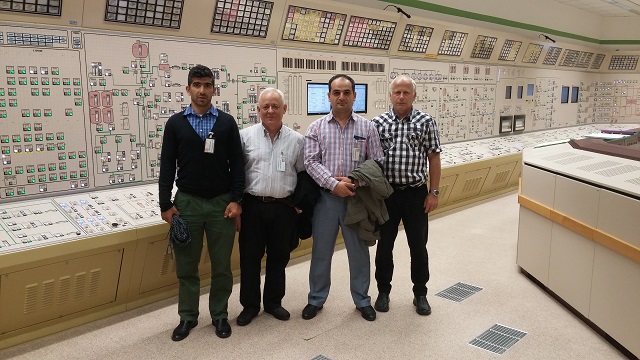
In frame of Task 4 of AR/RA/05-06 project European Commission and the Czech nuclear safety regulatory body (SUJB) organized a working meeting for NRSC and ANRA representatives held on 14-18 September 2015. The meeting was held in SUJB and Temelin NPP (Czech Republic). During the meeting, several meetings with Czech regulatory body and operating organization have been implemented during which following topics were discussed. Ageing management Equipment maintenance effectiveness monitoring Equipment qualification During the visit, NRSC and ANRA experts conducted technical walkdowns and visited the Temelin NPP turbine building as well as training center with full scope simulator designed by Westinghouse.
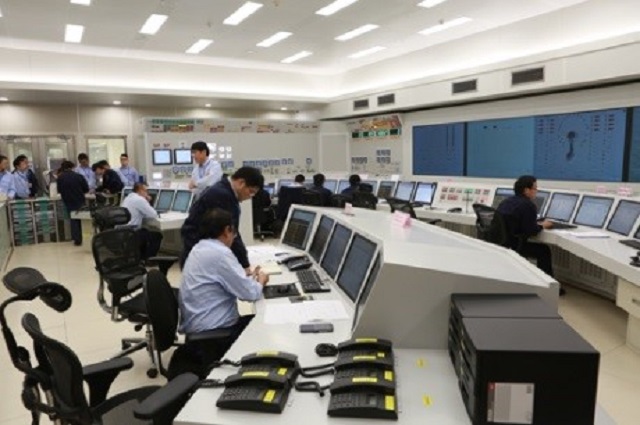
Two new Chinese nuclear power units – Changjiang 1 and Yangjiang 3 – have moved closer to commissioning by achieving a sustained chain reaction for the first time. Both reactors are expected to begin operating later this year. Unit 1 of the Changjiang nuclear power plant, under construction on China’s southern island province of Hainan, achieved first criticality at 3.39am today, China National Nuclear Corporation (CNNC) announced. Initial approval for the Changjiang plant’s construction was granted by China’s National Developmental and Reform Commission in July 2008. Early site works began in December 2008. Construction of unit 1 began with the pouring of first concrete on 25 April 2010, while that for unit 2 was poured on 21 November 2010. The loading of the 121 fuel assemblies into the core of Changjiang 1 – a 650 MWe CNP-600 pressurized water reactor – began on 26 August. Changjiang 1 is scheduled to begin operating by the end of 2015, with unit 2 set to start up next year. The plant, near Hoi Mei Tong village in China’s Hainan province, is being built as a joint venture between CNNC and China Huaneng Group, with shares split 51% and 49%, respectively. The plant will eventually comprise four units, with units 3 and 4 housing either CNP-650 or ACP-600 reactors. Construction of both those units is scheduled to begin by 2018.

From 26 June to 4 July of 2015 the leading specialist of radiological laboratory of NRSC was participating in the IAEA regional workshop on «Establishing Enhanced Approaches to the Control of Public Exposure to Radon». During the workshop the approaches on preventing measures of radon gas of experienced countries were discussed. NRSC is participating in radon gas program in Armenia. The workshop gave additional information to be used during radon gas measurement activities.

NRSC delegation comprising of the heads of neutronics analysis and nuclear fuel, thermal-hydraulics analysis and risk assessment groups, visited Regulatory Authority of the Republic of Belarus for an experience and knowledge shearing meeting from 29 to 31 July 2015. The purpose of the visit was to hold a training course on deterministic and probabilistic methods of safety assessment for nuclear installations for relevant specialists of BNRRA, Technical support organization of BNRA (Sosny Institute) and operating organization as well as for technical staff of Belarusian NPP involved in the safety analysis. The training program covered in particular, essentials of safety assessment, legislative and normative bases, national and international best practices, computational codes applied, requirements to the computational codes as well as practical examples of safety assessment and independent review for regulatory authorities were discussed and illustrated. NRSC experts addressed questions and concerns of the training course participants as well as provided them with practical recommendations and suggestions on further enhancement and strengthening of the national capabilities in the area of safety assessment. It has been agreed to continue cooperation between BNRRA and ANRA/NRSC in the area of independent review and systematic competence building and other areas of mutual interest. [smartslider3 slider=11]

NRSC delegation participated in the workshop on development of computational tools for nuclear materials management held from 20 to 21 June 2015 in Almaty, Kazakhstan. NRSC presented and demonstrated its own development – NUCMAT software that allows performing the nuclear material accounting both at the state and at the facility/LOF levels as well as generating the accounting records (GL, PI) and reports (IRC, PIL, MBR). Questions, suggestions and concerns addressed to NRSC delegation followed the presentation of NUCMAT. Besides, on June 22, 2015 NRSC delegation visited the Nuclear Physics Institute in Almaty to discuss and establish scientific cooperation to investigate accident tolerant fuel properties. NRSC delegation visited the experimental facilities of the Nuclear Physics Institute, namely, research nuclear reactor, critical stand, material science laboratory and plasma coating laboratory and familiarized with the capabilities and experience of the staff in relation to investigation of fuel rod cladding materials. The decision has been made to develop joint proposals for common research projects. [smartslider3 slider=10]
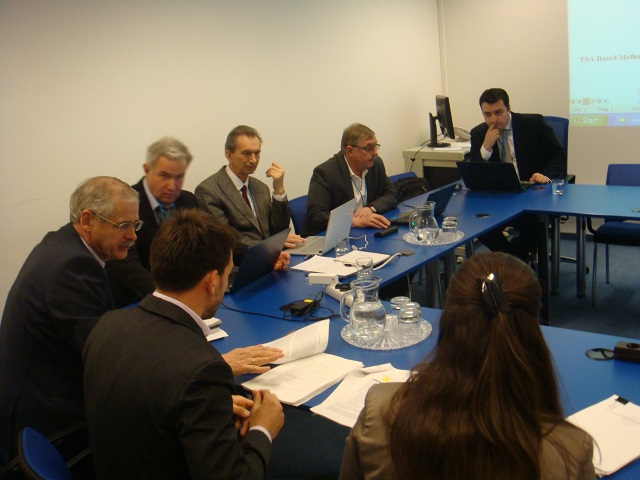
The meeting was devoted to developing and applying PSA based methods for complementary assessment of NPPs’ robustness against the impact of extreme events. The problematic issues raised during the previous technical meeting in 2014 were thoroughly discussed. Mainly following type of issues were covered: uncertainty in the phenomena of severe accidents and hazards, combination of extreme hazards, multi-unit effects, screening methodology and others. For each of the issue the status and problematic aspects were discussed. During the discussions the experience and knowledge of experts as well as materials of 2014 technical meeting have been used. As a result of the meeting a list of recommendations with possible problem solutions and/or request for additional investigations was developed for IAEA. The draft report developed during the meeting was presented to IAEA nuclear safety assessment section and NSAT (nuclear safety action team) representatives. During the closing briefing it was decided to present developed report for international community review and later develop it up to the level of IAEA publication (TECDOC or Safety Report). [smartslider3 slider=9]

NRSC՛s representative participated in consultancy meeting held in Vienna from 20-24 April 2015. During the meeting, experts reviewed and discussed events reported to IRS in the period from 2012 to 2014. Total number of considered events is 254. After the screening 136 most interesting events were selected for Blue Book development. Selected events were grouped based on the related topic (human performance, fire, seismic hazard, ageing, etc.). During the meeting for each topic experts presented brief description of the events reported, safety significance and lessons learned. As a result of the meeting the draft version of Blue Book was developed. It is planned to publish Blue Book in 2016 after the review to be done by IAEA staff and national IRS coordinators.

NRSC’s staff member participated in a workshop which took place in Los Alamos National Laboratory; the workshop was devoted to Criticality Calculations with the MCNP. The workshop mainly was focused on best MCNP application practices as how to perform criticality calculations for reactor physics and criticality safety applications by applying the MCNP. During the workshop the following topics were mainly addressed: criticality calculations by using Monte Carlo methods, geometry, including lattices and repeated structures, tallies and mesh tallies, cross-section data, statistical analysis, assessment of the convergence of Keff and the source distribution (Shannon Entropy), 3D depletion capabilities of MCNP6, and sensitivity analysis of Keff. NRSC uses MCNP to carry out independent analysis of criticality safety of dry spent fuel storage, the ANPP spent fuel pools and spent fuel transport cask for Armenian Nuclear Regulatory Authority’s decision-making. Furthermore, recently the NRSC started to apply the MCNP for 3D depletion analysis of WWER-440 spent fuel assemblies for further burnup credit, severe accident and radiological consequence analysis. 3D Depletion Model of WWER-440 Fuel Assembly developed by MCNP6

Second meeting of the VVER Regulators Forum Working Group on Regulatory Use of PSA took place in Helsinki, Finland from 11 to 13 February 2015. The meeting was mainly devoted to: Task 1 – Comparison of current EE PSA approaches & regulations, Task 2 – Fukushima lessons learned for PSA implementation and Task 3 – National risk-informed decision making framework. Within Task 1 PSA WG members made national presentations on national practices in the field of EE PSA. Presented information was discussed within the group and used during discussions on Task 1 questionnaire developed by AERB (India). Within Task 2 NRSC presented results of investigation of available international studies on Fukushima and allowed to come up with the list of PSA related problems associated with Fukushima. During discussions it was decided to create a questionnaire on Task 2 based on presented results. Within Task 3 STUK (Finland) prepared a questionnaire that was circulated between participants for comments. It was agreed that STUK will finalize the questionnaire based on participant’s comments and prepare final version of questionnaire with STUK answers by the next meeting. In addition, VVER Regulatory Forum observers presented topical presentations on Task 1 and 2 related issues: The Fault Sequence Analysis Method to Assist in Evaluation of the Impact of Extreme Events on NPPs (IAEA), Fukushima lessons learned from PSA. Overview of international activities (e.g. ASAMPSA_E project) (GRS).
IRS national coordinators meeting was held in IAEA Headquarters on 28-31 October 2014. During the meeting representatives of member states presented and discussed recent events reported to IRS. Country presentations contain detailed information on the selected events, particularly following details have been presented: brief information about NPP, event description, direct and root causes, NPP safety assessment, lessons learnt and corrective actions. The information presented during the meeting was interesting from ANPP safety assessment point of view. Thus, it is recommended to use information of IRS during verification of completeness of ANPP safety assessments. If found necessary new events or failure modes could be added to ANPP current safety studies based on IRS events investigation. During the meeting presented events were grouped based on the causes and it was concluded that main events were connected with modification process and internal flooding. Mentioned topics were selected for further investigation within international working groups. Taking into account intensive modernization program of ANPP it is recommended to join international working group activities related to events occurred as a result of modifications. IRS related organizational and procedural issues were also covered during the meeting. Particularly reporting procedure and timing were discussed.

