

In the frame of STCU P461 project, NRSC participated in a training on Practical Aspects of Nuclear Forensics held on October 14-22, 2014. The training was organized by Nuclear Physics Institute and Kharkov Physical-Technical Institute of National Academy of Science in Ukraine. In Caucuses Armenia plays an essential role in fighting against illicit trafficking of nuclear and radioactive materials. Because of this very reason Armenia was invited to take part in this training. During the training several practical activities were carried out about NDA of nuclear materials. In addition, analysis was made over nuclear-criminological testing scenarios and real cases as well. An agreement was reached with project coordinators to develop ongoing mutual cooperation and to include Armenia in future planned evens.
On October 14-16, 2014, NRSC’s experts took part in Mystic Deer tabletop exercise during the Nuclear Forensics Working Group Workshop in Budapest, Hungary. Nuclear Forensics is a practical-scientific research activity that aims at providing necessary technical evidence for detecting the crimes committed by the usage of the nuclear or radioactive materials. The key concepts of GICNT document “Nuclear Forensics Fundamentals for Policy Makers and Decision Makers” were discussed during the event. In addition, practical applications in relation to the Fundamentals were provided to participants. The participants discussed and carried out exercises in the area of Rules of Evidence. The most discussed topics were the development and the use of nuclear security tools that can be implemented at the national level, (e.g., in national nuclear forensics libraries and other places), and the associated decision-making considerations regarding policy-level issues such as resources, legal authorities, and interagency coordination. NRSC is heavily involved in the development and expansion of Nuclear Forensics capabilities in Armenia. In particular, according to the RA Government decree, the NRSC provides National Security Service in the area of illegal nuclear and radioactive materials’ detection and characterization. In addition, NRSC developed the ARIS system that can be considered as a basis for development of National Nuclear Forensics Library.
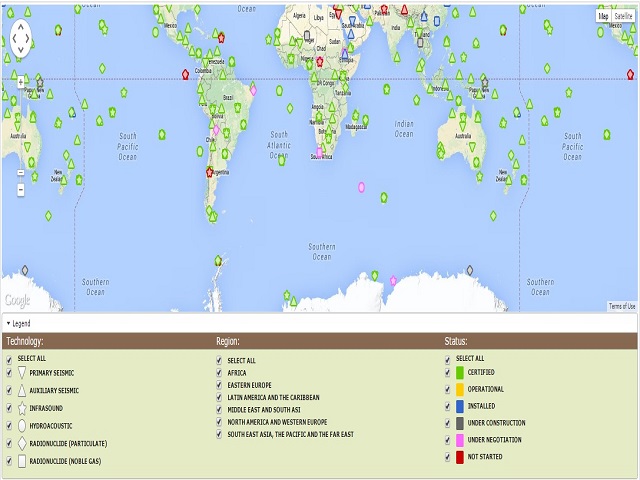
Leading specialist on radiation safety of the NRSC Karen Haroyan participated in training on NDC (National Data Centre) Capacity Building: Access and Analysis of Radionuclide IMS (International Monitoring System) Data Products, which was held from September 29 to October 10, 2014, in Vienna International Center, organized by CTBTO. The training was quite interesting and fascinating, since there were many other participants from around the globe – Ukraine, Belarus, Albany, Tunisia and Philippines. The main goal of this training was to introduce the methods of analyses of data collected by International Monitoring System (IMS), and, in particular, analyses methods of gamma spectrums collected from radionuclide stations. The ISM consists of four types of monitoring systems: radionuclide monitoring system, seismic monitoring system, hydro-acoustic monitoring system, and ultrasound monitoring system. The radionuclide monitoring system consists of 80 stations designed to determine the radionuclide concentration in the air and activity measurements, and 40 stations designed to determine the concentration and activity of noble gases. The monitoring system also contains 6 special laboratories. During the trining the following topics were presented: how to use the data of CTBTO IMS, access to the CTBTO IMS database, National Data Center in box – program package, which contains several gamma spectrometric programs designed to analyze the gamma spectrum of noble gases and other radionuclide spectral analyses.
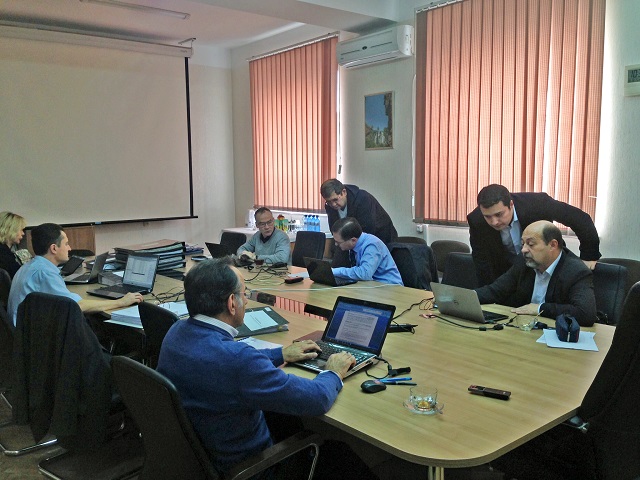
In June 2011, the Armenian Nuclear Regulatory Authority requested for IPSART mission. In October 2014, the IAEA carried out the mission under the IAEA Extra Budgetary Project (EBP) funded by Norway and aimed at strengthening nuclear safety. IPSART mission’s objective was to carry out an independent international peer review of the Level-1 PSA study for the ANPP Unit 2. The PSA scope included internal initiating events, internal fires, seismic and other external events for nominal power operating conditions. In addition, a limited review was provided for the ongoing Low Power and Shutdown part of the PSA process. During the observation, the following specific fields of expertise were addressed: initiating events, system reliability, accident sequence, human reliability, statistical data, natural hazard analysis and other elements of the PSA studies. The mentioned issues were thoroughly reviewed by IPSART expert team that consisted of two IAEA staff members and four external experts from Russia, Switzerland, Ukraine and the USA. The NRSC and the ANPP specialists worked jointly with the IPSART team during the whole mission. During the mission a tour inside the plan was organized so that to help the IAEA experts to more closely observe the various plant features and the layout of buildings and corresponding equipment . The plant walkdown includes the turbine hall (in particular, the elevation 14.7), main control room, battery and DC compartment, diesel generator building, and the mezzanine rooms. The IPSART mission resulted in a final report, which, in turn, was delivered to all counterparts. The final report contained all the comments and findings addressed during the mission. The results of IPSART mission will surely be used for the improvement of the ANPP PSA models. [smartslider3 slider=8]
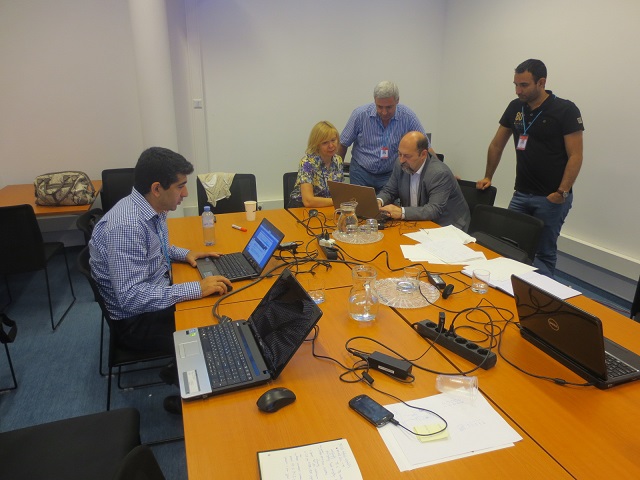
The second technical meeting on the FSA-ANPP project was held on August 18-22, in Vienna, Austria. The NRSC, the ANPP, the IAEA and the Lloyd Register (as an observer) representatives participated in the meeting. Several project-related issues were discussed during the meeting, and one of the discussed issues was the PSA model update aimed to address specific requirements on the HVAC system in terms of extreme temperatures. Besides, component additional operability limits data were integrated into the FAST-EE input deck, which, in turn, was reviewed and updated by taking into consideration the current status of the ANPP safety assessment. During the meeting the FAST-EE input deck draft was developed, which allows to perform experimental calculations. The calculations were performed for eight different combinations of external hazards. The calculations’ results’ thorough analysis revealed the necessity of corrections and updates for both the FAST-EE software and the ANPP input deck. The meeting’s participants revised the status of the FSA-ANPP project and decided the further actions. And as for the final technical meeting, the date was decided on January 12-23, 2015. [smartslider3 slider=7]

